

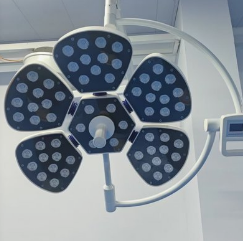
The light source in the operating room must be shadowless, as it can eliminate shadows in the surgical area through a combination of multiple light sources, providing clear, uniform, and stable illumination for doctors, ensuring precise surgical implementation, and ensuring patient safety. 1、 Eliminating shadows: a prerequisite for precise operation Surgical operations require extremely high visual clarity, and even small shadows may obstruct key tissues such as blood vessels and nerves, leading to misjudgment or operational errors by doctors. Shadowless lamps avoid this problem through special design: Multi light source layout: Dozens or even hundreds of small light beads are arranged in a circular pattern on the lamp panel, with each bead being an independent light source. When light shines on the surgical area, the shadow generated by a single light source will be covered by the light from other light sources. 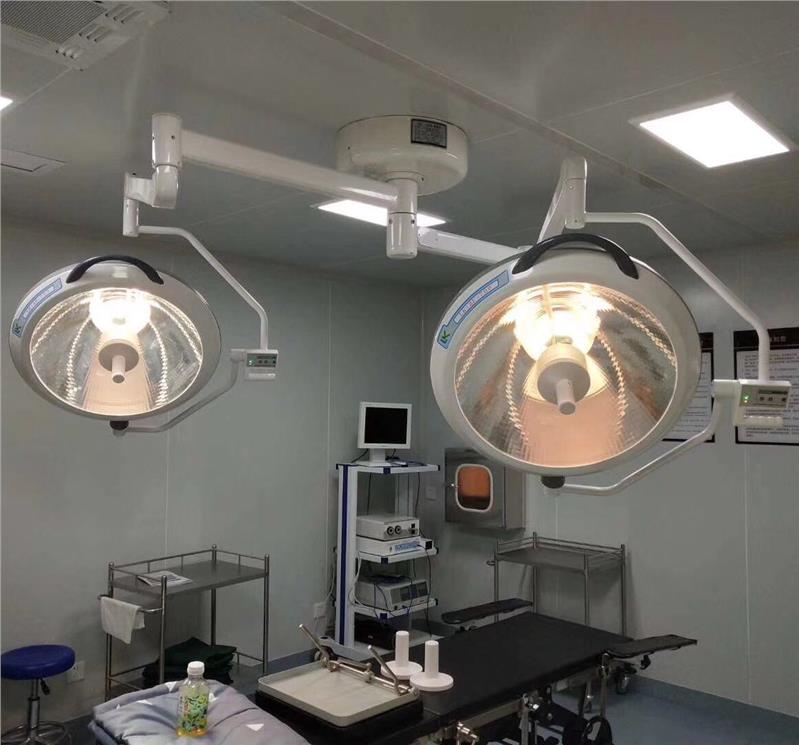 Scientific light path design: After being focused by the reflector, the light from all the light beads converges at an almost vertical angle at the surgical site (i.e. the “cold light focus”), further reducing the shadow accumulation caused by different light source projection angles, and ultimately achieving a “shadowless” effect. For example, when doctors perform heart bypass surgery, they need to suture millimeter sized blood vessels. If there is a shadow in the field of view, it may be difficult to see the vascular anastomosis site clearly, increasing the risk of surgery; And shadowless lamps can make the direction of blood vessels and tissue layers clearly visible, providing a foundation for fine operation. 2、 Lighting characteristics: Suitable for surgical scene requirements In addition to “shadowless” lighting, the operating room light source also needs to meet the special scene requirements of surgery, which cannot be replaced by ordinary lighting: 1. High brightness and adjustability: During surgery, doctors need to observe deep tissues (such as the abdominal cavity and chest cavity) for a long time. The brightness of the shadowless lamp can reach 100000 lux or more (equivalent to 2-3 times the noon sunlight), and the brightness can be adjusted according to the surgical site (such as soft light for minimally invasive facial surgery and strong light for deep surgery) to avoid too strong or too weak light that makes it difficult to see clearly. 2. Stable color temperature: The color temperature of shadowless lamps is close to natural light (5000-6000K), which can truly restore tissue color – such as the pale pink of normal tissue, the bright red when bleeding, and the dark red of infected tissue. It helps doctors judge tissue status through color and avoid misjudging the condition due to color temperature deviation. 3. Low heat output: Traditional light sources generate a large amount of heat when emitting light. If directly irradiated on the surgical area, it may cause tissue drying, cell damage, and even affect the temperature stability of anesthesia patients. The shadowless lamp adopts “cold light technology” to isolate infrared rays through filters and heat dissipation systems, ensuring that the temperature in the illuminated area is close to human body temperature and protecting tissue activity.
  3、 Safety and Convenience: Ensuring the Surgical Process The operating room environment is special, and the design of shadowless lamps also needs to balance safety and operational convenience: Aseptic requirements: The lampshade under the lamp body is made of easily disinfectable materials such as stainless steel, which can withstand high temperature and high pressure sterilization or disinfectant wiping, avoiding the lamp body from becoming a source of bacterial transmission and complying with the operating room aseptic operation standards. Flexible adjustment: The lamp arm can rotate and lift 360 degrees, allowing doctors to quickly adjust the position and angle of the lamp according to the surgical position (such as the patient lying flat or sideways), ensuring that the light is always focused on the surgical incision without interrupting the operation. In summary, shadowless lamps are not simply “lit up”, but professional medical equipment that integrates “shadowless, high brightness, cold light, sterile, and adjustable”. It provides a stable and clear field of view for surgery by solving problems such as shadows, brightness, and color temperature of ordinary light sources, which directly affects the accuracy of surgery and patient safety. Therefore, it has become an indispensable core equipment in the operating room.
Post time: Nov-24-2025