

The reason for the design of shadowless lamps: solving the core problem of surgical lighting In the medical surgical scene, precise lighting is a key prerequisite for ensuring surgical safety and success. The core reason for the design of shadowless lamps is to solve the core pain point of “shadow interference” in the surgical area under traditional lighting, while meeting the strict requirements of surgery for lighting intensity, stability, and safety, creating a clear and unobstructed operating field of view for medical staff. When traditional lighting equipment (such as regular table lamps and pendant lights) illuminates the surgical area, the hands, instruments, or bodies of medical staff may block the light, creating a noticeable shadow at the surgical incision site. These shadows can seriously hinder doctors’ observation of tissue hierarchy, vascular direction, and lesion location, which may lead to operational errors, such as misjudging the location of blood vessels causing bleeding or missing small lesion tissues, directly threatening the patient’s life safety. Surgical operations require extremely high clarity of the field of view, especially in precision surgeries such as neurosurgery and ophthalmology. Even millimeter level visual field occlusion can lead to serious consequences, which has driven the development of shadowless lamps. 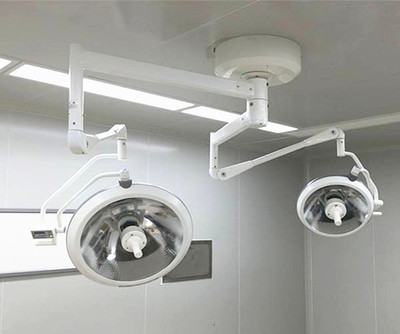 To eliminate shadows, shadowless lamps adopt the core design logic of “multi light source collaborative illumination”. It does not rely on a single strong light source, but instead uses dozens or even hundreds of independent light sources arranged in a circular or honeycomb pattern, each of which can project light to the surgical area from different angles. When a certain light source is obstructed, light sources from other angles will immediately fill the lighting gap in that area, weakening the shadow to a level that is difficult for the naked eye to detect, ultimately achieving a “shadowless” effect. This design does not completely eliminate shadows, but rather reduces the shadow area and density through the multi angle complementarity of the light source, achieving the standard of not affecting surgical operations. In addition to “eliminating shadows”, the special requirements of surgical scenes further refine the design of shadowless lamps. Firstly, the light intensity and adjustability are important. During surgery, it is necessary to distinguish between normal and diseased tissues, with a light intensity of 50000-100000 lux (ordinary indoor lighting only 300-500 lux). At the same time, doctors can adjust the brightness according to the surgical site (such as deep chest cavity, superficial skin) to avoid strong light stimulation to the eyes or insufficient light affecting judgment. Secondly, there is light focusing ability. Shadowless lamps need to have precise focusing function, which can concentrate the light in the surgical area with a diameter of 10-25 centimeters, reduce the interference of light on surrounding tissues, and avoid blurred vision caused by light diffusion.
 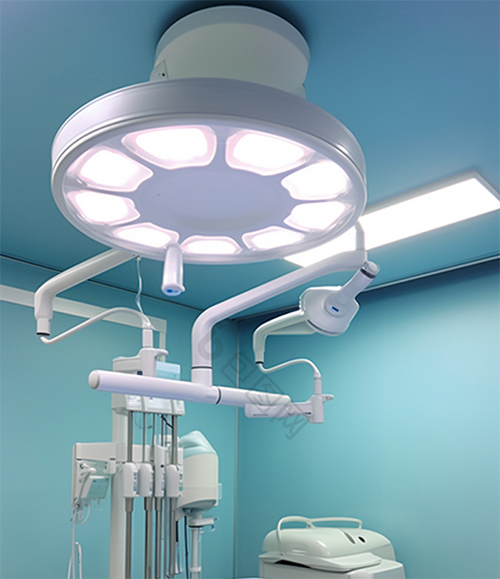 In addition, safety and practicality are also important considerations in design. The surgical environment needs to be strictly sterile, so the shell of the shadowless lamp is made of special materials that are heat-resistant and easy to disinfect, and the lamp body structure has no dead corners to prevent bacterial growth; The design of the lamp arm should be flexible and stable, with the ability to rotate 360 degrees to adjust height and angle, meeting the needs of different surgical positions (such as supine and lateral). At the same time, it should be able to remain fixed after adjustment to avoid the impact of lamp body shaking on operation during surgery; Some high-end shadowless lamps also integrate cold light technology to reduce the heat generated by light and avoid prolonged exposure that may cause tissue dryness in the surgical area or sweat on the hands of medical staff. In summary, the design of shadowless lamps is a combination of medical needs and engineering technology: with the core goal of “eliminating surgical shadows”, it solves the pain points of traditional lighting through complementary multiple light sources. Then, focusing on the precision, safety, and practicality of surgery, it optimizes the details such as light intensity, focusing, and non bacterial properties, ultimately providing stable and clear visual protection for surgical operations, and becoming an indispensable core equipment in modern surgical procedures.
Post time: Sep-01-2025