

The filtration performance of geotextiles: principles, core indicators, and engineering value
The filtering performance of geotextile is one of its core functions in geotechnical engineering. Essentially, it maintains the stability of soil structure and ensures smooth drainage through the dual functions of “blocking soil permeability and preventing siltation”, avoiding engineering diseases such as piping and instability caused by water flow erosion. It can be called the “soil filter” in engineering. The quality of its filtering performance directly determines the long-term durability of engineering projects such as roadbeds, slopes, and water conservancy facilities.
From the perspective of filtration principle, geotextiles achieve graded filtration through a three-dimensional mesh pore structure: when water carries soil particles to infiltrate, the pores of the fabric will accurately intercept soil particles larger than the pores, preventing them from flowing away with the water and avoiding the soil skeleton from being emptied; At the same time, allowing water to pass smoothly, quickly draining internal seepage from the soil, reducing pore water pressure, and minimizing the risk of infiltration damage. This characteristic of “blocking but not blocking, penetrating but not leaking” is different from traditional filtering materials (such as sand and gravel cushion layer), which combines lightweight and high efficiency, and can greatly simplify the construction process.
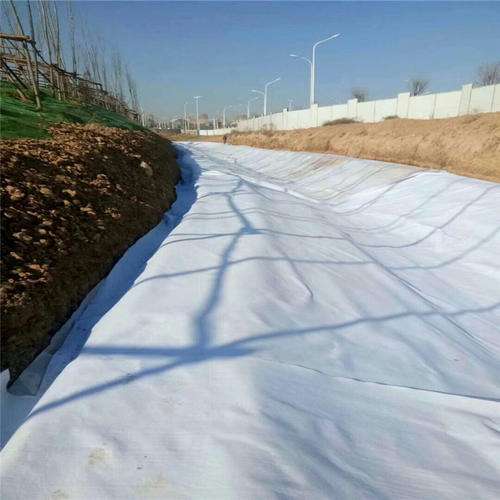
There are three core indicators for evaluating the filtration performance of geotextiles. One is the equivalent pore size (O95), which refers to the fact that 95% of the pores in the geotextile are smaller than this pore size and need to match the characteristic particle size of the protected soil (such as d85) – usually requiring the O95 pore size of the geotextile to be smaller than the d85 particle size of the protected soil to ensure effective interception of soil particles and avoid water flow obstruction caused by a too small pore size. The second is the permeability coefficient, which requires the vertical permeability coefficient of geotextile to be much greater than that of the protected soil (generally more than 10 times that of the soil), to ensure that water can be quickly discharged through the fabric and avoid water accumulation causing soil softening. The third is the resistance to clogging, which is the key to long-term filtration effect: high-quality geotextiles form well connected and non sedimentable pore channels by optimizing fiber arrangement (such as the fluffy structure of short fiber needle punched geotextiles), reducing the retention of fine particles in the pores. Even long-term use can maintain filtration efficiency and avoid drainage failure caused by clogging.
The filtration performance of different types of geotextiles varies. Short fiber needle punched geotextile is suitable for most soil filtration scenarios (such as roadbed and slope protection) due to its random interweaving of fibers, uniform pores, and three-dimensional structure, as well as strong resistance to clogging; Long fiber geotextile has a high porosity and permeability coefficient, but its pore size uniformity is slightly inferior to short fiber geotextile, making it more suitable for water conservancy projects with large water flow; Composite geotextile (such as geotextile and geomembrane composite) can not only filter but also have anti-seepage function, adapting to complex engineering requirements.
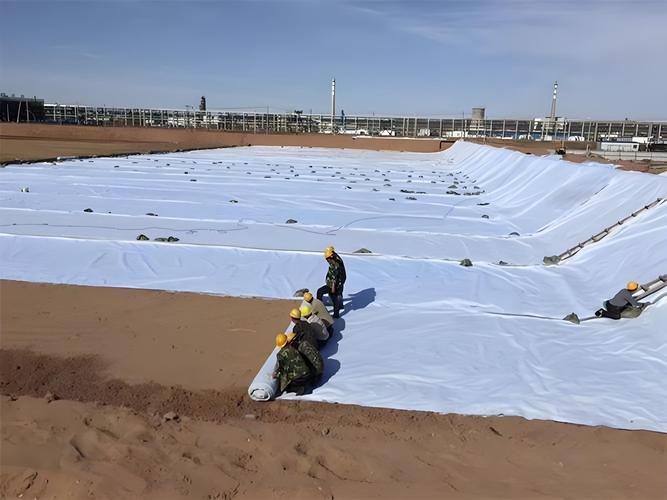
In engineering applications, the filtering performance of geotextiles needs to be optimized based on actual scenarios. For example, in fine sand foundations, short fiber geotextiles with smaller pore sizes should be selected to prevent the loss of fine sand; In river bank protection engineering, it is necessary to consider both permeability and erosion resistance, ensuring filtration and drainage while resisting water flow impact. If the filtering performance does not meet the standard, it may lead to serious engineering problems such as soil infiltration deformation, roadbed settlement, and slope landslides. Therefore, the filtering parameters of geotextiles must be strictly tested and adapted to the characteristics of the engineering soil in order to fully exert their filtering effect and ensure long-term stability of the project.
Post time: Nov-12-2025