

Geotextile, also known as geotextile fabric, is a permeable sheet-like or roll-like engineering material made primarily from high molecular polymers (such as polypropylene, polyester, polyethylene, polyamide, etc.) through various processes such as spunbonding, needle punching, braiding, weaving, and stitch-knitting. It is an indispensable synthetic material in geotechnical and civil engineering, and is widely used in various fields such as water conservancy, transportation, environmental protection, and construction, due to its excellent basic functions such as filtration, drainage, isolation, reinforcement, protection, and impermeability.
Main types
Based on its manufacturing method and structural characteristics, geotextiles are mainly divided into the following categories:
1. Short fiber needle-punched nonwoven geotextile:
◦ Production process: Synthetic staple fibers are subjected to opening, carding, and web formation, followed by repeated puncturing with a large number of fine needles with barbs, causing the fibers to entangle and consolidate with each other.
◦ Characteristics: The structure is fluffy, with large and evenly distributed pores. It exhibits good water permeability, filtration performance, and planar drainage capacity, and has strong resistance to deformation, but its tensile strength is relatively low.
◦ Common specifications: Mass per unit area (grams/square meter) is its main specification indicator.
2. Filament spunbond needle-punched nonwoven geotextile:
◦ Production process: The polymer is melted and extruded into filaments from a spinneret, which are then cooled, laid into a net, and reinforced with needle punching.
◦ Features: Compared with spunlace fabric, its fibers are continuous, boasting higher tensile strength, tear resistance, and bursting strength, offering superior durability. It also exhibits excellent water permeability and filtration performance.
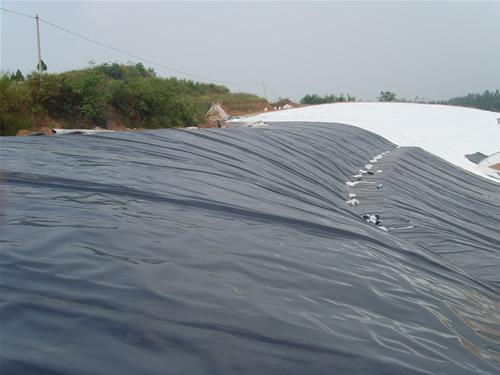
3. Woven geotextile:
◦ Production process: Traditional weaving technology is employed, in which two sets of yarn (warp and weft), typically flat yarn or split film yarn, are interwoven perpendicularly to form a structure similar to that of ordinary woven bags.
◦ Characteristics: The pores are regular rectangles with relatively uniform pore size. It exhibits high tensile strength in both warp and weft directions, high modulus, and low elongation. However, its filtration performance is inferior to nonwoven fabrics because the pores are easily clogged by fine particles.
4. Weaving geotextile:
◦ Production process: It is made through processes such as knitting, stitching, or a combination of knitting and stitching, where fibers or filaments are interlocked and intertwined in multiple directions.
◦ Characteristics: The structure lies between woven and non-woven fabrics, exhibiting good flexibility and adaptability, with certain types possessing high multidirectional strength.
5. Composite geotextile:
◦ Production process: Two or more different types of geotextiles (such as nonwoven and woven) are compounded through methods such as needle punching, thermal bonding, or chemical bonding.
◦ Characteristics: Combining the advantages of different materials. For example, nonwoven/woven composite materials possess both the good filtration properties of nonwoven fabrics and the high strength of woven fabrics, and are commonly used in combined applications of reinforcement and filtration.
main purpose
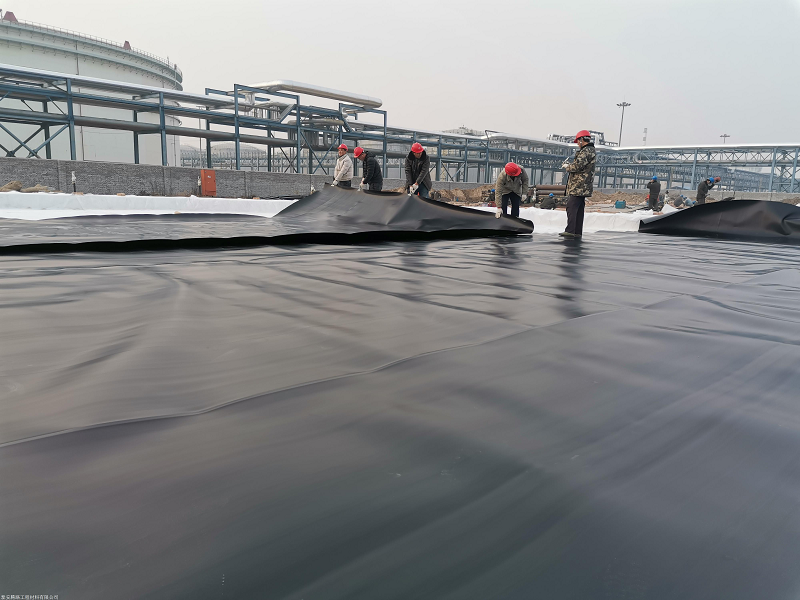
Based on the characteristics of the aforementioned different types, geotextiles play multiple “roles” in engineering practice:
1. Isolation function:
◦ Purpose: It is laid between two types of soil or materials with different properties (such as subgrade and soft foundation, gravel base and soil subgrade) to prevent them from mixing and maintain their respective structural integrity and bearing capacity. This is one of its most basic and widely used functions, commonly seen in foundation treatment for highways, railways, airport runways, and dams.
2. Filtration and anti-filtration:
◦ Purpose: Placed at the junction of soil and water flow (such as behind drainage bodies of dams and retaining walls, and revetment projects), it allows water to flow smoothly while effectively preventing soil particles from being carried away by the water flow, thus preventing soil loss and structural instability. Short fiber and filament needle-punched nonwoven fabrics are particularly outstanding in this regard due to their three-dimensional porous structure.
3. Drainage function:
◦ Purpose: Utilizing its certain thickness and porosity, it forms drainage channels within the soil, collecting and guiding water flow (such as groundwater and seepage water), accelerating soil consolidation, and reducing pore water pressure. It is commonly used in soft foundation treatment as vertical drainage belts, horizontal drainage layers at the back of retaining walls, and underground drainage systems for sports venues.
4. Reinforcement effect:
◦ Purpose: Utilizing its high tensile strength, it disperses stress within the soil, limits lateral displacement of the soil, and enhances the overall stability and bearing capacity of the soil. It is commonly used for reinforcing weak foundations, constructing reinforced earth retaining walls, and greening and protecting steep slopes. Woven geotextiles and high-strength nonwoven/composite geotextiles are often used for this purpose.
5. Protective effect:
◦ Purpose: As a cushion layer, it disperses external stress, protects geomembrane or other waterproof materials from punctures, or shields bank slopes and riverbeds from erosion caused by water flow and waves. It is often used in conjunction with other geosynthetic materials, such as geomembrane and geogrid.
6. Impermeability:
◦ Purpose: By coating or laminating impermeable materials (such as PE film) onto geotextiles, a composite geomembrane is formed, which is used in projects requiring impermeability, such as artificial lakes, reservoirs, landfills, wastewater treatment ponds, etc.
In summary, the type of geotextile determines its core performance, while engineering requirements guide the selection of its specific applications. In practical engineering, engineers choose the appropriate type of geotextile based on the specific technical requirements of the project (such as strength, permeability, durability, cost, etc.), to economically and effectively solve problems such as stability, drainage, isolation, and reinforcement in geotechnical engineering. It is one of the key materials for achieving safety, economy, and environmental protection goals in modern engineering construction.
Post time: Mar-24-2026