

In the modern medical system, the shadowless lamp is an indispensable core equipment in the operating room, and its technical performance directly affects surgical accuracy and patient safety, and is an important support for the development of surgical medicine.
The core function of the surgical shadowless lamp is to eliminate shadow interference in the surgical area, providing the surgeon with a uniform, stable, and adjustable lighting environment. During the surgical process, the obstruction of the doctor, instruments, and patient’s body can easily create shadows. If the lighting is insufficient, it can cause the surgeon to be unable to clearly identify fine structures such as blood vessels and nerves, increasing the risk of operational errors. The shadowless lamp uses a reasonable layout of multiple light sources to illuminate the surgical field from different angles, utilizing the superposition effect of light to offset shadows and ensure that every detail of the surgical site is clearly visible, providing visual support for key operations such as cutting, suturing, and hemostasis.
In addition to basic lighting functions, modern surgical shadowless lamps also have multiple features that can adapt to clinical needs. Its illumination intensity can be precisely adjusted according to the type of surgery, ranging from general surgery to neurosurgery, ophthalmology and other fine surgeries, providing brightness that conforms to the surgeon’s visual habits while avoiding strong light stimulation of the retina. Some high-end products are equipped with color temperature adjustment function, which can simulate natural light and help doctors accurately judge tissue vitality and bleeding situation. In addition, shadowless lamps need to meet sterile requirements, and the lampshade and operating components should be made of antibacterial materials with easy to clean characteristics, which can effectively reduce the risk of surgical infection; Its flexible robotic arm design can achieve 360 degree rotational positioning, ensuring that the light is always focused on the surgical area, adapting to different surgical positions and operator habits.
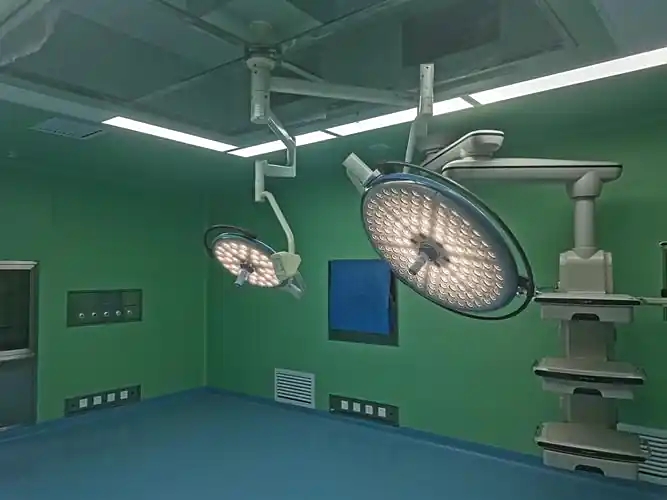
From the perspective of medical development, the technological evolution of surgical shadowless lamps has witnessed the progress of surgical medicine. Early ordinary lighting fixtures were unable to solve the problem of shadows, which limited the development of precision surgery; With the integration of optical technology, mechanical engineering, and materials science, shadowless lamps have continuously made breakthroughs in lighting efficiency, shadow elimination rate, sterile design, and other aspects, promoting the popularization of high-end medical technologies such as minimally invasive surgery and microsurgery. Nowadays, intelligent shadowless lamps integrate functions such as camera and data transmission, enabling real-time recording and remote consultation of surgical processes, providing convenience for medical teaching, case analysis, and technical exchange, and becoming an important component of the smart healthcare system.
To gain a deeper understanding of surgical shadowless lamps, it is necessary to break through the superficial understanding of “lighting tools” and see the technical logic and medical value behind them. It is not only a carrier of light, but also a guardian of medical safety and an enabler of surgical accuracy. Its development process demonstrates the core purpose of technology serving life and health. In the future medical field, with the further integration of artificial intelligence and optical technology, surgical shadowless lamps will develop towards a more intelligent, precise, and humanized direction, continuously injecting momentum into the improvement of surgical medical quality.
Post time: Oct-27-2025