

Ammonium sulfate ((NH₄)₂SO₄), as a classic nitrogen-sulfur compound fertilizer, its “MMA grade” (usually referring to high purity, high-quality grade suitable for agriculture) product is one of the important fertilizers for increasing crop yield and improving quality in modern agricultural production. Its mechanism of action is mainly reflected in the following aspects:
1. Provide dual nutrition to meet the core needs of crop growth
Ammonium sulfate contains approximately 21% nitrogen (N) and 24% sulfur (S). Nitrogen is a fundamental element that constitutes proteins, chlorophyll, nucleic acids, and other vital substances, directly participating in photosynthesis and growth metabolism of crops. Adequate nitrogen supply can promote the lush growth of crop stems and leaves, increase tillering, and lay a material foundation for high yield. Sulfur is also an essential macronutrient, serving as a key component for the synthesis of sulfur-containing amino acids (such as cysteine and methionine), proteins, vitamins, and certain secondary metabolites. In sulfur-deficient soils, the supplementation of sulfur can significantly improve crop growth, especially for crops that require a large amount of sulfur, such as cruciferous, leguminous, and allium crops, showing a notable yield increase effect.

II. Unique physiological characteristics and soil adaptability
1. Advantages of ammonium nitrogen: The nitrogen in ammonium sulfate exists in the form of ammonium nitrogen (NH₄⁺), which can be adsorbed by soil colloids, has low mobility, and is not easily lost with water, resulting in relatively long-lasting and stable fertilizer efficiency. Especially under low temperature conditions, crops sometimes absorb and utilize ammonium nitrogen better than nitrate nitrogen, which is beneficial for the utilization of fertilizers in early spring crops or during low temperature seasons.
2. Physiological Acid Fertilizer: After being applied to the soil, ammonium sulfate is selectively absorbed by crops as ammonium ions (NH₄⁺), leaving sulfate ions (SO₄²⁻) in the soil, resulting in a temporary decrease in soil solution pH. This characteristic makes it suitable for neutral or alkaline soils, where it can regulate the local rhizosphere microenvironment and enhance the availability of certain medium and trace elements (such as iron, manganese, and zinc). However, when used extensively in acidic soils over a long period, it is important to supplement with lime or other substances to neutralize the acidity.
III. Scientific application is the key to increasing yield
To maximize the yield-increasing benefits of ammonium sulfate, it is necessary to combine it with scientific fertilization principles:
1. Apply fertilizer according to soil conditions:
◦ Preferably used in sulfur-deficient and alkaline soils: For soils with low available sulfur content (such as acidic red soil with strong leaching in the south, sandy soil) or high pH, ammonium sulfate can not only supplement nitrogen but also correct sulfur deficiency, with the most prominent yield-increasing effect.
◦ Caution for use in acidic soil: Long-term and large-scale application alone on acidic soil may exacerbate soil acidification. It should be combined with organic fertilizer or an appropriate amount of lime, or used in rotation with other types of nitrogen fertilizers.
2. Fertilization for crops:
◦ Primarily used for sulfur-loving crops: For crops that require a large amount of sulfur, such as rapeseed, soybeans, peanuts, garlic, onions, sugar cane, and tobacco, it has significant effects on increasing yield and improving quality (such as enhancing oil content, protein content, and aroma).
◦ As a base fertilizer or topdressing: It is suitable to be applied deeply as a base fertilizer and covered with soil to reduce ammonia volatilization. When used as a topdressing, it should also be applied in trenches or holes and covered with soil to avoid surface application.
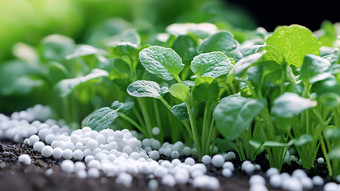
3. Coordinated application and balanced fertilization:
Ammonium sulfate primarily provides nitrogen and sulfur, but it cannot replace phosphorus, potassium, and trace elements. It must be applied in combination with phosphate fertilizer, potassium fertilizer, and organic fertilizer according to soil test results and crop fertilization requirements, to achieve a balance of nitrogen, phosphorus, potassium, and medium and trace elements, in order to achieve sustainable yield increase.
◦ It can be temporarily applied separately from alkaline fertilizers (such as calcium magnesium phosphate fertilizer), but avoid direct mixing with alkaline substances to prevent ammonia volatilization and loss.
4. Suitable dosage and application period:
The dosage needs to be determined based on the target yield, soil fertility, and crop type. It is generally recommended to determine the dosage in conjunction with soil testing and fertilization prescription.
Pay attention to the critical periods for crop fertilization, such as the tillering and jointing stages of cereal crops, and the vigorous growth phase of economic crops, and apply topdressing in a timely manner to meet the peak demand for nitrogen and sulfur.
IV. Precautions
• Moisture-proof storage: Ammonium sulfate is prone to moisture absorption and caking, and should be stored in a dry environment. If it cakes, it can be crushed for application without affecting its fertilizer efficiency.
• Avoid direct contact with seeds: When used as seed fertilizer, it is necessary to control the dosage and maintain a certain distance from the seeds to prevent high-concentration salt from affecting seed germination.
Conclusion
MMA-grade ammonium sulfate, as an efficient source of nitrogen and sulfur, can effectively promote crop growth and development, enhance stress resistance, and ultimately achieve simultaneous improvement in yield and quality by simultaneously meeting the core needs of crops for nitrogen and sulfur, and by applying it scientifically under suitable soil and crop conditions. The full realization of its yield-increasing potential always relies on comprehensive consideration and precise fertilization management of the “soil-crop-fertilizer” system.
Post time: Mar-17-2026