

Agricultural drones, with their flexibility, efficiency, and precision, have been deeply integrated into the entire agricultural production chain, covering multiple key links from pre production surveying to post production management, becoming the core application carrier of smart agriculture.
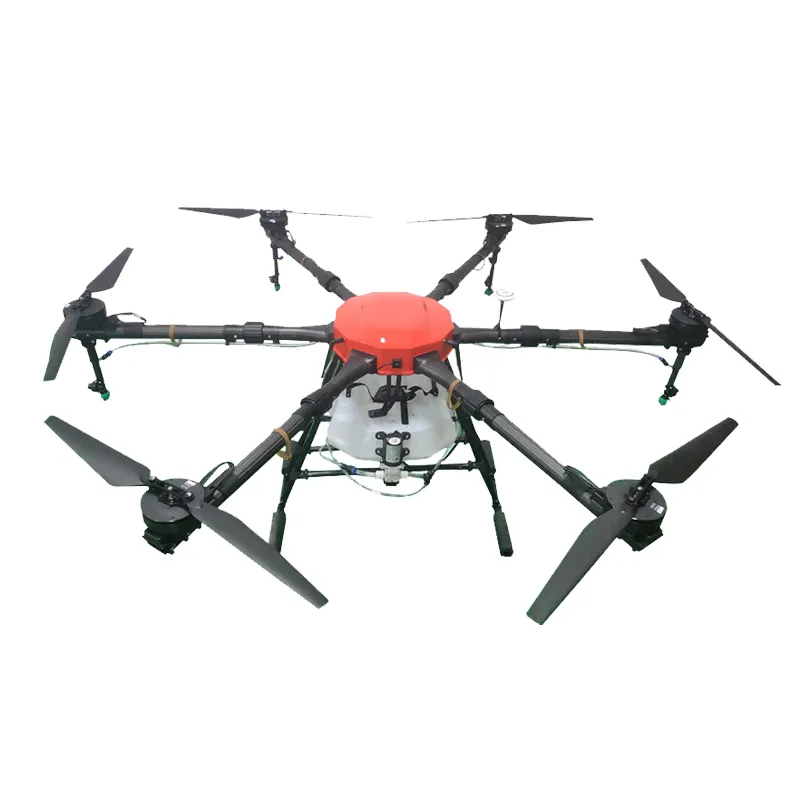
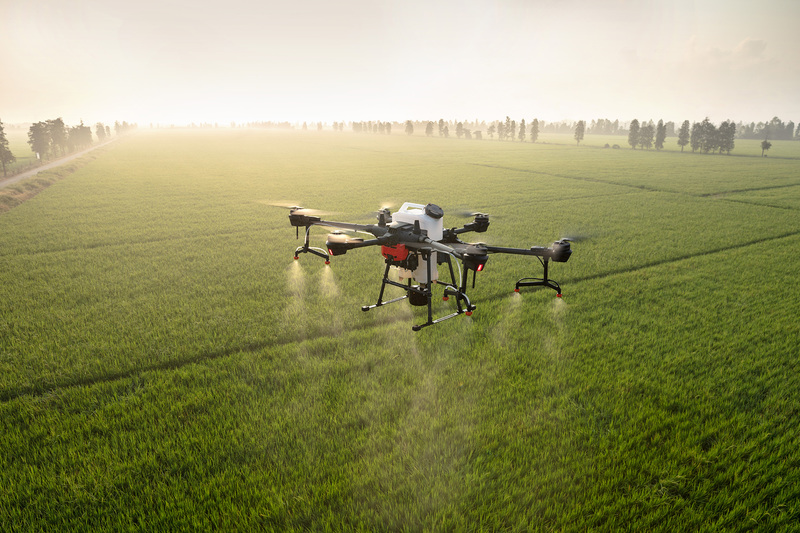
In the field of field management, the application of drones is the most widespread. Pesticide and fertilizer spraying is its basic application, which converts liquid medicine or fertilizer into small droplets through high-pressure atomizing nozzles, combined with height positioning technology to achieve uniform coverage, especially suitable for field crops such as rice and wheat, as well as economic crops such as fruit trees and tea trees. Compared to traditional methods, it can increase pesticide utilization by over 30% and reduce the risk of manual exposure to pesticides. In addition, drones can also perform fine operations such as foliar fertilizer spraying and growth regulator spraying, helping to improve crop quality and increase yield.
Crop monitoring and evaluation is an important application direction of unmanned aerial vehicles. Equipped with a high-definition visible light camera, it can capture real-time crop growth status, identify issues such as seedling shortage, lodging, and weed growth; Equipped with a multispectral camera, it can accurately determine the nutritional status, moisture content, and degree of pest and disease infection of crops by analyzing the spectral reflectance of crop leaves. The backend system converts the collected data into visual reports, providing farmers with accurate decision-making basis for fertilization, irrigation, and pest control, avoiding blind operations.
Drones also play an important role in the sowing and planting process. For crops such as rice and rapeseed, drones can evenly sow seeds in the field through specialized seeders, with an operational efficiency more than 10 times that of manual sowing. They can also accurately control the sowing amount based on the plot area, improving seed utilization. In the field of forestry, drones can also complete tasks such as afforestation and seeding, seedling monitoring, etc., especially suitable for areas such as mountains and deserts where manual operations are difficult, to assist in ecological afforestation and forestry management.
Farmland surveying and data collection are the characteristic applications of drones. With the help of GPS positioning and remote sensing technology, drones can quickly draw topographic maps of farmland, soil fertility distribution maps, crop planting planning maps, etc., providing accurate data support for farmland irrigation system design, crop rotation planning, land transfer evaluation, etc. At the same time, drones can monitor the soil moisture and meteorological conditions of farmland in real time, and build a farmland production database based on historical data, promoting the transformation of agricultural production from “experience driven” to “data-driven”.
In special scenarios, the application value of drones is more prominent. For example, after disasters such as floods and droughts, drones can quickly survey the affected areas, assess the area and degree of crop damage, and provide a basis for post disaster rescue and replanting plans; In large-scale farms, drones can be used in conjunction with IoT devices to achieve full process monitoring and intelligent management of the production process, improving farm operational efficiency.
In summary, the application of agricultural drones has evolved from single operations to diversified and intelligent development, continuously promoting the upgrading of agricultural production models and providing strong support for the modernization of agriculture.
Post time: Oct-17-2025