

Surgical Shadowless Lamp: The Core Cornerstone of Precise Medical Lighting
In the operating room, a special space that concerns the safety of life, surgical shadowless lamps are not ordinary lighting tools, but core medical equipment that ensures the smooth progress of surgery. Their technical design and clinical application deeply meet the precise needs of surgical operations, carrying the important mission of improving surgical safety and optimizing diagnosis and treatment effects.
The core function of surgical shadowless lamps is first reflected in eliminating shadows and providing uniform illumination. In surgical procedures, the doctor’s hands, surgical instruments, patient’s body tissues, etc. may all produce occlusion shadows. If the lighting is insufficient, it can lead to blurred surgical fields and increase the risk of vascular and nerve damage. The shadowless lamp focuses light on the surgical area from different angles through the circular arrangement of multiple sets of lamp beads and special optical design. It uses the principle of light superposition to cancel out shadows and form a uniform lighting environment without blind spots, ensuring that doctors can clearly distinguish tissue layers, vascular directions, and lesion locations, providing a basic guarantee for precise operation.
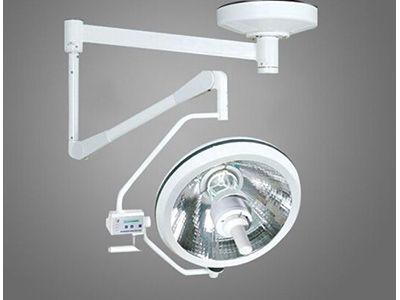
Secondly, it has adjustable lighting parameters to meet the needs of different surgical scenarios. There are differences in the requirements for light intensity, color temperature, and irradiation range among different departments and types of surgeries. Neurosurgery surgery requires high brightness and high color rendering light to distinguish fine neural tissues; Orthopedic surgery requires expanding the irradiation range to cover the entire surgical area of the limbs; Ophthalmic surgery requires soft and precise lighting to avoid strong light stimulation of the eyes. Modern surgical shadowless lamps can adjust the light intensity (usually between 100000 and 150000 lux) through knobs or touch panels, and control the color temperature within the natural white light range of 4300K to 5000K, which not only conforms to human visual habits but also accurately reproduces tissue colors, reducing visual fatigue and judgment errors.
In addition, the surgical shadowless lamp is designed to balance sterility and safety. The equipment casing is made of antibacterial material, with a smooth surface that is easy to disinfect, avoiding surgical infections caused by bacterial growth; The lamp body can flexibly adjust the angle and height, and achieve 360 degree rotation through a cantilever structure, without occupying surgical operation space. It also has anti glare and anti infrared radiation functions, which not only protect the eye health of doctors, but also avoid thermal damage to patient tissues caused by infrared radiation, reflecting the “patient-centered” medical equipment design concept.
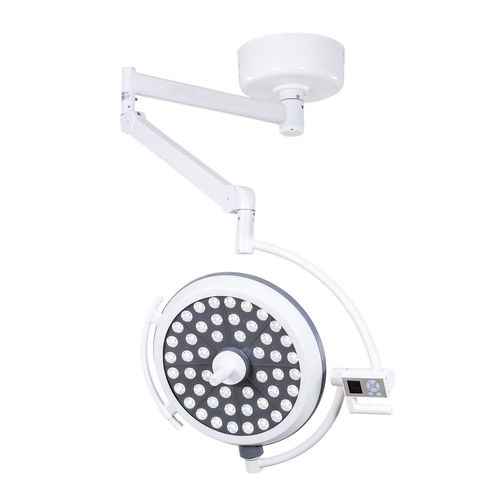
To gain a deeper understanding of surgical shadowless lamps, it is necessary to go beyond their superficial positioning as “lighting tools” and see the medical technological progress and clinical synergy value behind them. Early surgical lighting relied solely on ordinary incandescent lamps, which had weak illumination and heavy shadows, severely limiting the development of surgical procedures; With the advancement of optical technology and materials science, shadowless lamps have evolved from a single light source to a combination of multiple light sources, upgraded from manual adjustment to intelligent control. Some high-end products also integrate cameras and data transmission functions, which can record surgical processes in real time and provide support for teaching and remote consultations, becoming an important node connecting clinical operations and medical informationization.
Meanwhile, the quality of surgical shadowless lamps is directly related to the success rate of surgery and patient prognosis. A high-performance shadowless lamp can effectively reduce surgical complications caused by visual errors, shorten surgical time, reduce intraoperative trauma and postoperative recovery period for patients; Poor quality or non-standard equipment may pose potential risks to surgery due to unstable lighting, incomplete shadow removal, and other issues. Therefore, the medical industry has strict standards for the production and testing of shadowless lamps, and their optical performance, sterility level, safety protection and other indicators must be certified by authoritative institutions to ensure that they meet the stringent requirements of clinical diagnosis and treatment.
Post time: Nov-14-2025