

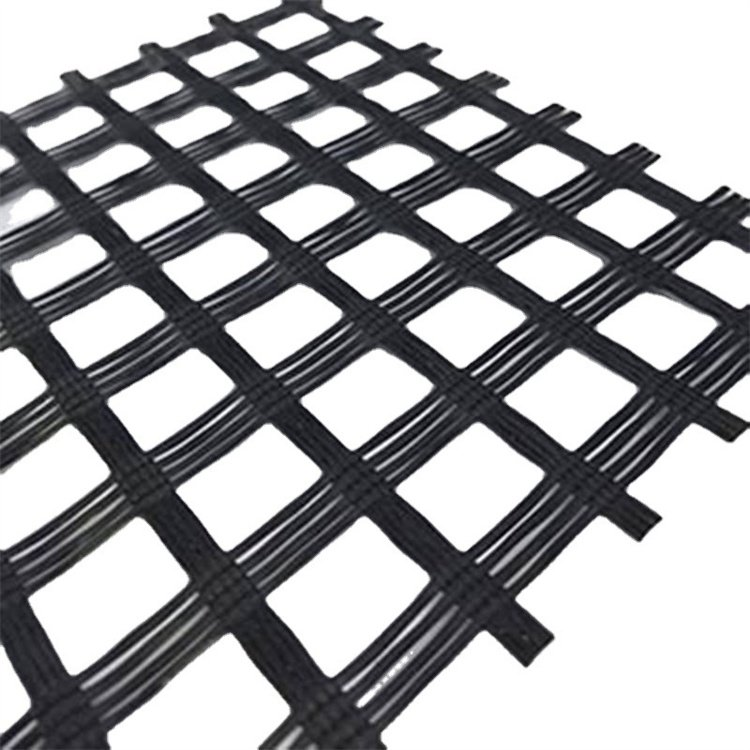
Geogrid, as an important geosynthetic material, is widely used in engineering projects such as highways, railways, embankments, slope protection, and soft foundation treatment. It can effectively improve the bearing capacity of the foundation, diffuse stress, reduce uneven settlement, and limit lateral displacement of the soil. To ensure optimal engineering performance, technical specifications must be strictly followed during the construction process, and the following key points must be noted:
1、 Preparation before construction
1. Material inspection and storage:
After the grille is delivered to the site, its specifications, mechanical properties (such as longitudinal and transverse tensile strength, elongation, etc.) must be checked to ensure they meet the design requirements, and the product certificate and inspection report must be checked.
The materials should be laid flat and stored, avoiding prolonged exposure to sunlight (especially plastic grilles) to prevent aging. On site storage should not exceed 48 hours. If an extension is required, it should be covered and protected.
2. Lower layer treatment:
The laying surface (sub layer) must be flat and solid, with local height differences not exceeding the specified value (usually not exceeding 5cm). It is strictly prohibited to have hard protrusions such as fragments or stones to prevent the grille from being broken.
Remove tree roots, weeds, sharp objects, etc. from the surface to prevent damage to the material. For soft foundation, drainage, dredging, replacement and other treatments should be carried out first to ensure the stability of the foundation.
3. Layout and Planning:
Measure and layout according to the design drawings, mark the laying edges and the sequence of large-scale laying, and plan the laying direction and connection scheme of the roll material.
2、 Laying process control
1. Laying direction:
◦ It must be laid strictly in the direction required by the design. Usually, the main force direction of the grille (longitudinal high-strength direction) should be perpendicular to the embankment axis or potential sliding direction.
2. Laying method:
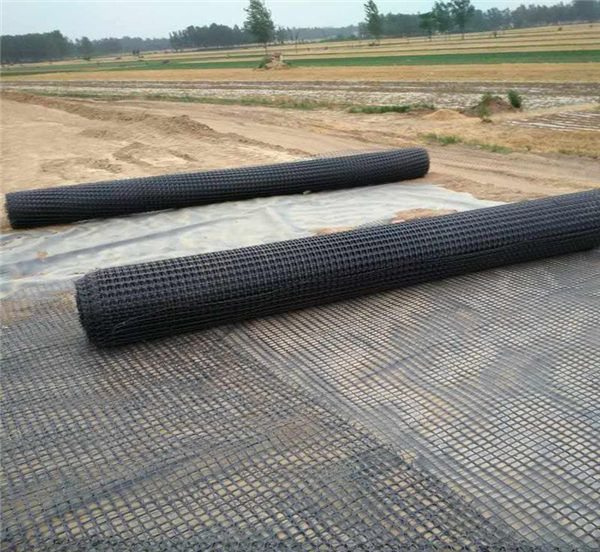
When manually laying, the grille should be tightened, flattened, and tightly attached to the underlying layer to avoid wrinkles and distortions. It can be temporarily fixed with rivets (such as U-nails, steel bars) or precast concrete blocks to prevent displacement.
When laying machinery, specialized laying machines or modified equipment should be used to ensure smooth and uniform deployment, avoiding sudden pulling or twisting.
3. Tension and attachment:
When laying, a certain tension should be maintained to keep the grid in a taut state and fully exert its tensile performance. But the tension needs to be uniform to avoid excessive local stress.
Ensure that the grille is tightly attached to the underlying layer, and if necessary, use lightweight machinery to moderately compact or manually press it to eliminate any gaps at the bottom.
3、 Connection and overlap
1. Overlap width:
The overlap width between the vertical and horizontal directions must meet the design requirements. The general longitudinal overlap width is 10-20cm, and the transverse overlap width is 15-30cm. In the direction of force, the overlap width can be appropriately increased.
2. Connection method:
Binding connection: the most commonly used. Use high-strength plastic tape or iron wire (with rust prevention treatment) to pierce and tie in a “zigzag” shape, with a spacing of usually 10-15cm between binding points.
◦ Specialized connectors: Use manufacturer provided specialized connectors such as connecting rods and clamps to ensure reliable, convenient, and fast connections.
Stitching connection: For geotextile composite grids, industrial sewing machines can be used for stitching.
3. Interlayer bonding:
When laying multiple layers, the joints between the upper and lower layers should be staggered by at least 50cm and distributed in a “cross” shape to enhance overall integrity and avoid the formation of weak zones.
4、 Backfilling and compaction
1. Timely backfilling:
After the grid is laid, the filling material should be covered in a timely manner to prevent direct sunlight aging or being blown by the wind. The exposure time should not exceed 48 hours.
2. Packing requirements:
The first layer of filling material should be pushed from the middle of the laying section to both sides using a light bulldozer or front-end loader, and the unloading height should not exceed 1 meter.
The maximum particle size in the filling material should be less than one-third of the compacted thickness of each layer, and there should be no sharp edges to avoid puncturing or scratching the grid during the rolling process.
3. Paving and Rolling:
The filling material should be evenly spread and leveled. It is strictly prohibited for transport vehicles and rolling machinery to drive directly or make sharp turns on uncovered grids to prevent displacement and damage to the grids.
The first layer should first use a lightweight roller (such as a static roller) to stabilize the pressure at low speed 1-2 times from the middle to both sides, so that the grid is preliminarily fixed by embedding the filling material.
Subsequently, normal compaction operations can be carried out according to the prescribed layer thickness, number of rolling passes, and rolling speed. It is strictly prohibited to use protruding rolling equipment such as sheep foot rollers to directly contact the grille.
5、 Other general precautions
1. On site protection: During the construction period, any grids that have been laid but not filled or partially damaged should be repaired or replaced in a timely manner. The repair range should extend at least 30cm beyond the damaged edge.
2. Coordinated operation: The laying, backfilling, and rolling processes of the grid should be closely connected, with a streamlined operation to improve efficiency and reduce adverse environmental impacts.
3. Quality inspection: During construction, there should be a dedicated person responsible for quality control, checking the laying direction, overlap width, tension, flatness, timely backfilling, rolling process, etc., and keeping records.
In short, the construction core of geogrid lies in “careful preparation, smooth laying, reliable connection, timely protection, and standardized compaction”. Only by strictly controlling the construction quality of each link can we ensure that the geogrid and soil work together to achieve the design goals of strengthening, reinforcing, isolating, and protecting.
Post time: Mar-09-2026