

The core of extending the service life of anti-seepage geomembranes in aquaculture lies in source selection, standardized construction, and scientific maintenance, which can be achieved through the following three measures: 1、 Product selection: Reduce aging risk from the source Choosing the right material is the foundation for extending lifespan, with a focus on material and performance parameters: • Give priority to raw material HDPE film: choose 100% raw material to make high-density polyethylene (HDPE) film, thickness ≥ 1.0mm (recommended for medium and large ponds ≥ 1.2mm), its chemical stability is far better than the recycled material film, which can fundamentally improve the anti-aging ability. Strengthen key additives: It is required to add sufficient amounts of anti ultraviolet (UV) agents (essential for outdoor use) and antifreeze agents (in areas below -20 ℃ in the north) to the film body to avoid brittleness and aging caused by light exposure and low-temperature freeze-thaw. Choose composite membrane for complex scenarios: When there are gravel, grass roots, or water with acid-base imbalance (pH<5 or>9) at the bottom of the pool, choose a “HDPE membrane+non-woven fabric” composite geomembrane. The non-woven fabric can buffer punctures, isolate corrosion, and protect the core membrane layer. 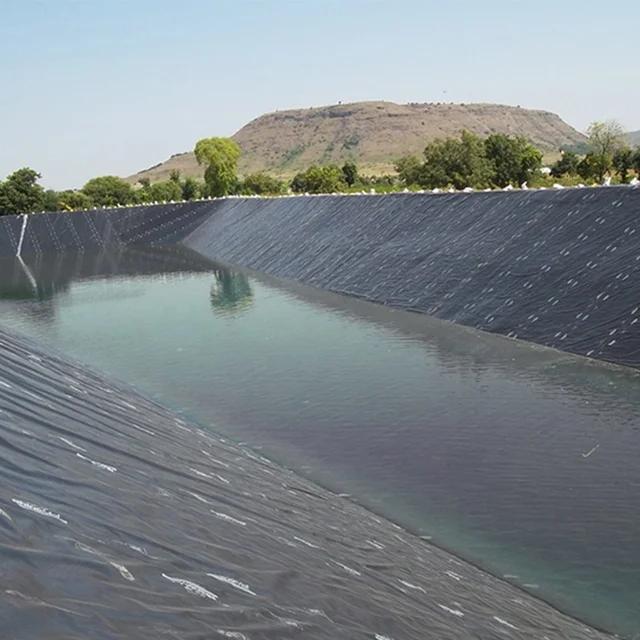 2、 Construction: Avoid initial damage and build a durable foundation Improper construction can directly shorten the lifespan of the membrane, and strict control is required in three key areas: 1. Bottom pre-treatment: Thoroughly clean the sharp debris (gravel, glass, grass roots) at the bottom of the pool before laying, and flatten and compact the bottom to avoid membrane puncture or long-term uneven stress that may cause rupture. 2. Professional welding and splicing: Select an experienced team for hot melt welding, and conduct a closed water test (observe no leakage after 48 hours of water injection) after welding to ensure that there is no virtual welding or leakage at the welding point, and to prevent chain aging caused by interface damage. 3. Edge fixation protection: The edge of the membrane body needs to be fixed with sandbags or concrete to prevent displacement and wear of the membrane body caused by changes in water level or wind force, and to prevent long-term exposure and accelerated aging of the edge. 3、 Maintenance: Daily management to reduce losses Scientific daily maintenance can significantly prolong the actual use time of membranes, with four key points to focus on: • Avoid contact with sharp objects: When clearing ponds or feeding, use plastic or wooden tools (such as plastic scrapers and wooden rakes), and prohibit hard tools such as iron shovels and steel forks from directly scratching the film surface; When breeding crustaceans (shrimp and crab), control the density to avoid excessive gnawing on the surface of the facial mask.
 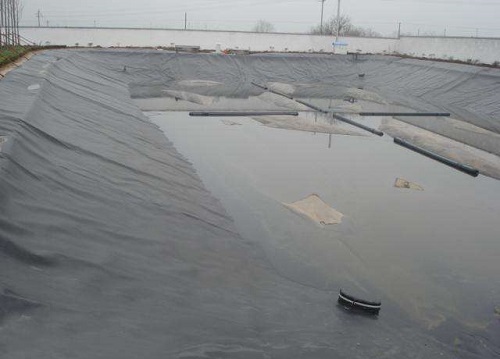 • Control water quality and chemicals: Avoid frequent use of strong oxidizing disinfectants (such as high concentration potassium permanganate), and if disinfection is necessary, choose mild iodine preparations; Regularly check the pH value of water quality and control it between 6.5-8.5 by changing the water or adding regulators to reduce acid-base corrosion. Outdoor sun protection and antifreeze: Sunshades can be built in high temperature areas in the south, or 5-10cm of fine soil can be covered on the film surface (balancing protection and natural environment simulation); Before freezing in winter in the north, lower the water level of the pond to 10-20cm above the membrane to avoid the expansion and compression of the ice layer, or choose a low-temperature frost resistant membrane (brittle temperature ≤ -40 ℃). Timely repair of damages: If small cracks or holes are found on the film surface during daily inspections, immediately use specialized HDPE repair patches (with hot melt adhesive) to stick and repair them; If the damaged area is large, it is necessary to cut the damaged area and re weld a new film to prevent the damage from expanding.
Post time: Sep-12-2025