

Step 1: Evaluate core requirements – who is using them? Who takes care of it?
This is the cornerstone of decision-making, directly determining the functional configuration of the nursing bed.
1. User condition assessment:
·Action ability: Can the user sit up and turn over independently? Is it complete bed rest, partial disability, or short-term postoperative recovery?
·Physical condition: Is there a high risk of bedsores, limb spasms, or cognitive impairment (such as dementia)?
·Weight and body shape: This is related to the load-bearing capacity and size selection of the bed.
2. Caregiver Capability Assessment:
·Caregiver stamina: is it an elderly spouse or a professional caregiver?
·Care intensity: Do users need frequent assistance in changing their position (such as turning over or sitting up)?
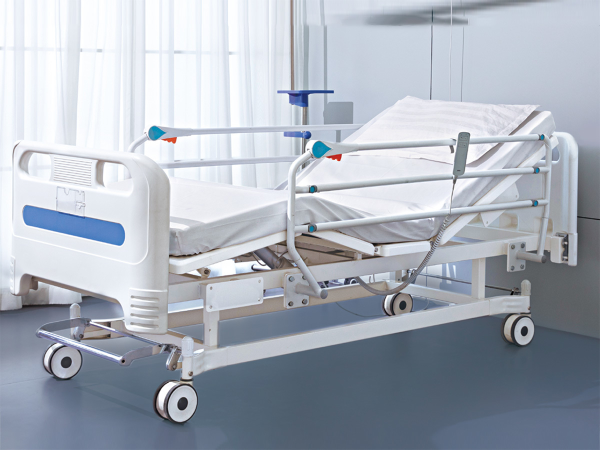
Based on the above evaluation, the bed driving mode can be determined as follows:
·Manual type: suitable for short-term home scenarios where the user has certain self-care ability, or the caregiver has good physical strength and low nursing frequency. The price is economical, but the function is single and the operation is laborious.
·Electric type (core recommendation): It is the mainstream of modern nursing beds that control the lifting and lowering of the back and leg bed boards through a remote control (i.e. “lifting the back” and “bending the legs” functions). It can greatly reduce the burden of care, allowing users to easily achieve independent sitting and lying, promote blood circulation and breathing, and is the basis for preventing bedsores and pneumoconiosis. The fully automatic type adds advanced functions such as automatic turning and overall lifting on the basis of electric power, and is suitable for severe care objects who are completely disabled and need to prevent bedsores.
Step 2: Focus on key functions and safety details
After determining the driving mode, it is necessary to finely compare the following functions:
1. Bed structure and function:
·Three functions/five functions: refers to the number of adjustable functions on the backboard and leg board. Lifting the back and bending the legs are the foundation. The overall lifting function of the head and tail of the bed is crucial, which not only facilitates caregivers to operate at a comfortable height (avoiding lumbar muscle strain), but also facilitates users to get in and out of the bed.
·Turning over function: For long-term bedridden individuals, automatic left and right tilting to assist in turning over is a powerful tool for preventing bedsores.
·Bed height range: The lowest height should ideally be reduced to 35-40 centimeters to prevent the risk of falling off the bed; The highest height should be convenient for care operations.
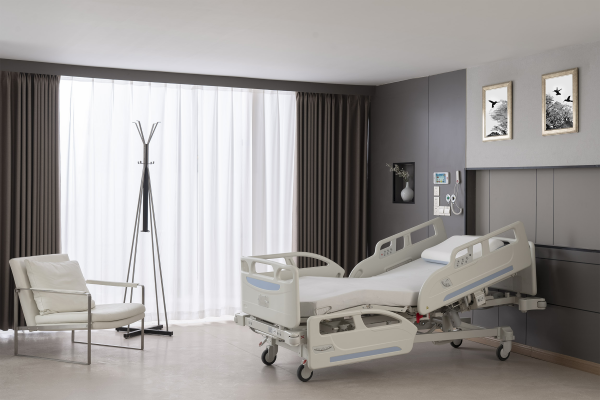
2. Security guarantee system:
·Guardrail: It must be detachable in sections for easy access to beds and care operations. The material should be sturdy, with smooth and silent lifting.
·Braking system: The universal wheels must have a central locking device to ensure that the bed is stable and not displaced in a fixed position.
·Safe power supply: The electric bed should use 24V safe voltage and have the function of emergency manual descent in case of power failure.
3. Mattress and accessory selection:
·The mattress is the second bed. Anti pressure ulcer air mattress (alternating wave type) is almost a necessity for high-risk patients. Even if using a regular mattress, it should have the characteristics of breathability, waterproofing, and easy cleaning.
·Practical accessories: bed specific shampoo basin, infusion stand, toilet orifice plate (used with toilet bowl), dining table plate, etc., can greatly improve the convenience of nursing and the quality of life of users.
Step 3: Match usage scenarios and quality considerations
1. Operating environment:
·For household use: It is necessary to measure the dimensions of the door, elevator, and corner passage to ensure that the bed can be installed smoothly into the house. Consider the coordination and space utilization of the home environment.
·Institutional use: More emphasis is placed on unified management, durability, and disinfection convenience. The material should be corrosion-resistant and easy to wipe.
2. Quality and after-sales service:
·Material and craftsmanship: The main body of the bed frame should be made of high-quality steel, with a stable structure and smooth and burr free welding points. The motor is the “heart” of the electric bed, and brand products with smooth operation, low noise, and overload protection should be selected.
·Brand and Certification: Priority should be given to professional medical device brands, and products should have a medical device registration certificate that complies with national safety standards.
·After sales service: Understand the warranty period (especially motor warranty), whether there are local repair outlets, and whether the supply of accessories is sufficient. Professional installation, usage guidance, and comprehensive after-sales support are crucial.
A suitable medical nursing bed is a reliable support for the dignity of life and a reliable partner on the road of care. Rational analysis and careful selection are the most practical care and guarantee for the lives that need to be cared for.
Post time: Dec-29-2025