

The service life of anti-seepage geomembranes in aquaculture is influenced by three core factors: material type, usage environment, and construction maintenance. The mainstream HDPE geomembranes usually have an actual service life of 10-20 years under standardized use.
1、 Core influencing factors (key factors determining lifespan)
1. Material type is the foundation
The durability of different materials varies significantly, which is the core determinant of lifespan:
· High density polyethylene (HDPE) film: the preferred material for aquaculture, with strong chemical stability and anti-aging (UV agent added), is the type with the longest service life, which can reach 15-20 years under standard use; If it is made from raw materials and has a thickness of ≥ 1.0mm, the service life can approach the upper limit.
· Recycled HDPE film/low purity film: doped with impurities or without anti-aging agent, the service life will be greatly shortened to 3-5 years, which is prone to cracking and leakage, and is not recommended for aquaculture.
Composite geomembrane (HDPE+non-woven fabric): If the non-woven fabric layer is exposed for a long time, it is prone to aging, and the overall lifespan is slightly lower than that of pure HDPE film, about 10-15 years. It is necessary to focus on protecting the non-woven fabric layer.
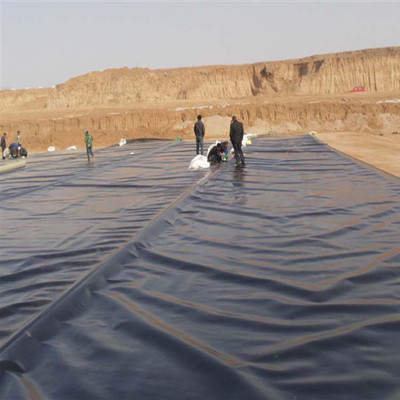
2. Use the environment to accelerate or delay aging
Environmental factors directly affect the aging rate of membranes and are the main external reasons for shortening their lifespan
◦ Light (UV): When used outdoors, UV is the core factor that accelerates aging. An unobstructed pond may have a 20% -30% shorter lifespan than a pond covered with plastic film.
◦ Temperature: In extremely cold northern regions (below -20 ℃ in winter), if the membrane has insufficient frost resistance, repeated freezing and thawing can easily lead to brittle fracture; The high temperature and exposure environment in the south can also accelerate the thermal aging of the film.
Water quality and soil: Saline alkali land, highly acidic (pH<5) or highly alkaline (pH>9) water/soil will slowly corrode the membrane body, and long-term use may shorten the lifespan by 3-5 years; Frequent use of strong oxidizing disinfectants (such as potassium permanganate) in aquaculture can also accelerate membrane aging.
3. Construction and maintenance determine the actual lifespan
Standardized operation can make the best use of the membrane, while improper operation can directly reduce its lifespan
◦ Construction quality: Virtual welding and leakage at the welding point can cause local damage, and if not repaired in a timely manner, the damage will expand; Unclean sharp stones (such as gravel and grass roots) at the bottom of the pool can puncture the membrane and directly shorten its lifespan.
· Routine maintenance: Frequently scraping the film surface with hard tools (such as shovels and wire netting) or letting crustaceans such as shrimps and crabs bite for a long time (especially rough facial mask) will cause physical damage; When clearing ponds, using high-pressure water guns to directly hit the membrane surface may also damage the structure of the membrane
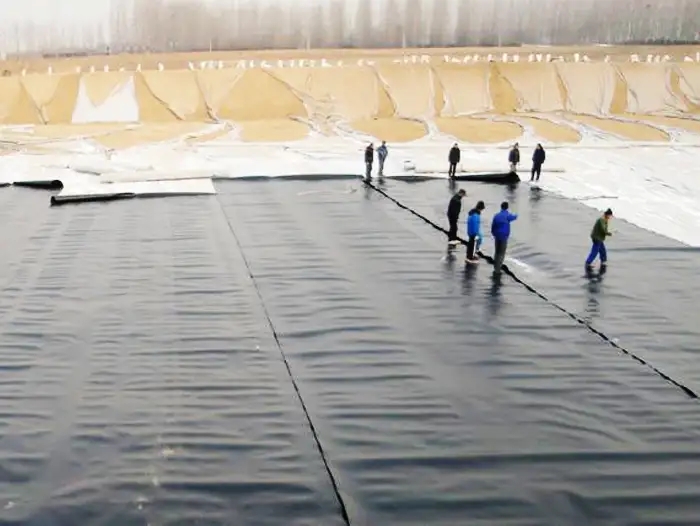
2、 Three key measures to extend service life
• Choosing the right materials: Priority should be given to raw HDPE film (thickness ≥ 1.0mm), and the manufacturer is required to add sufficient UV resistant and antifreeze agents (in northern regions).
Standardized construction: Thoroughly clean the debris (gravel, weeds) at the bottom of the pool before laying, select a professional team for welding, and conduct a closed water test after welding (observe no leakage after 48 hours of water injection).
• Daily protection: When clearing the pond, use soft tools (such as plastic scrapers) to clean the silt and avoid contact with sharp objects; Outdoor ponds can be equipped with sunshades (especially in the south), or covered with 5-10cm of fine soil on the surface of the membrane (balancing protection and natural environment simulation).
In summary, the lifespan of anti-seepage geomembranes in aquaculture is not a fixed value. By selecting the right materials, standardizing construction, and daily maintenance, mainstream HDPE membranes can be stabilized for more than 15 years, maximizing the reduction of repeated investment costs in aquaculture facilities.
Post time: Sep-15-2025