

The filtration performance of geotextiles is influenced by multiple factors such as the characteristics of the material itself, external environmental conditions, and engineering application scenarios. It can be divided into the following four categories:
1、 Core characteristics of the material itself
1. Pore size distribution and size: These are key factors affecting filtration performance, and the pore size needs to match the particle size distribution of the filtered soil. If it is too small, it will hinder water flow and cause water accumulation, while if it is too large, it will not be able to effectively intercept fine particles, which can easily lead to piping. In an ideal state, the equivalent pore size of geotextile should be between 1-3 times the size of fine particles in the protected soil.
2. Thickness and porosity: Under the same material, increasing the thickness appropriately can prolong the water flow infiltration path, improve the particle retention effect, and enhance the structural stability of the material; The porosity directly determines the water flow capacity. High porosity can reduce water flow resistance, but it needs to be matched with the pore size to avoid a decrease in interception capacity caused by high porosity.
3. Fiber type and structure: polyester, polypropylene and other synthetic fibers have better corrosion resistance and aging resistance than natural fibers, which can maintain long-term filtration stability; The fiber interwoven structure of needle punched geotextile is looser and has better water permeability than woven geotextile, while the compact structure of woven geotextile is easier to maintain shape stability in high-pressure scenarios.
2、 External environmental conditions
1. Soil characteristics: The particle size distribution, density, and moisture content of the filtered soil directly affect the filtration effect. Soil with high content of fine particles is prone to clogging the pores of geotextiles, reducing water efficiency; Excessive soil moisture content can increase particle mobility, potentially exacerbating the loss of fine particles and affecting filtration stability.
2. Hydrological conditions: If the water flow rate is too fast, it will enhance the scouring force on soil particles, which may exceed the interception limit of geotextiles and lead to the migration of fine particles; Chemical indicators such as acidity, alkalinity, and salt content in water can affect the material stability of geotextiles. Long term exposure to strong corrosive environments can cause the material to age and damage, indirectly reducing its filtration performance.
3. Temperature changes: Extreme high or low temperature environments can affect the physical properties of geotextiles, such as low temperatures that may make synthetic fibers brittle and structures prone to damage; High temperature may accelerate material aging, leading to pore size deformation and subsequently affecting filtration efficiency.
3、 Engineering Applications and Construction Factors
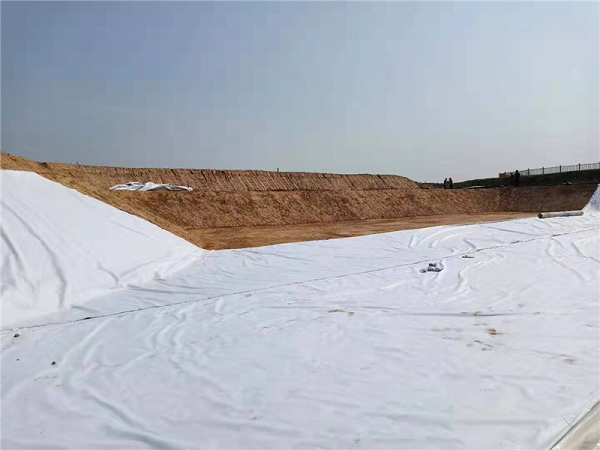
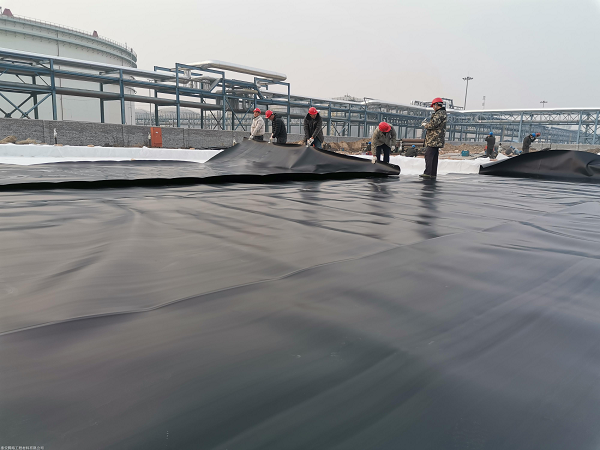
1. Laying method: If the geotextile is wrinkled, stretched excessively or damaged during laying, it will damage the uniformity of its pore size distribution, and local areas may lose their filtering function; Inconsistent laying direction and water flow direction can also increase water flow resistance and affect filtration efficiency.
2. Compaction and Load: Excessive compaction during construction can cause the pores of the geotextile to be squeezed and deformed, resulting in a decrease in water flow capacity; Excessive upper load during engineering operation may cause the geotextile to tightly adhere to the soil, increase the risk of pore blockage, and long-term affect the stability of filtration performance.
3. Protective measures: If the surface of the geotextile is not properly protected, it is prone to be punctured and damaged by sharp soil particles or construction machinery, forming local loopholes and causing the filtration function to fail; Geotextiles lacking UV protection will accelerate aging, deteriorate pore structure and mechanical properties, and decrease filtration efficiency when exposed to long-term sunlight in outdoor environments.
4、 Dynamic factors in long-term use
1. Pore blockage: During long-term use, fine particles that are trapped will gradually deposit on the surface of the geotextile and inside the pores, leading to a gradual decrease in water flow capacity. If the blockage is severe, it may cause poor water flow, thereby affecting the safety of the engineering structure.
2. Material aging: long-term effects such as ultraviolet radiation, temperature change and chemical medium erosion will break the geotextile fiber, loosen its structure, change its pore size distribution, and weaken its filtration performance. Its attenuation rate is closely related to the content of anti-aging additives in the material itself.
Post time: Feb-06-2026