

Common faults and maintenance points of shadowless lamps
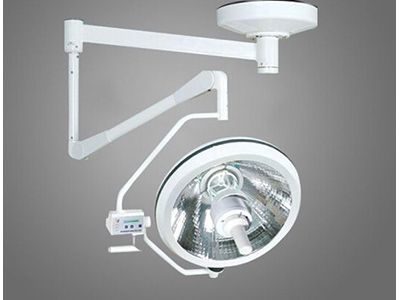
Shadowless lamp is a key equipment in medical surgery, and its malfunction can directly affect the clarity of the surgical field of view, requiring rapid and accurate troubleshooting and maintenance. The following are common types of faults, causes, and repair methods.
1、 Lighting system malfunction
• Fault 1: Flashing lights or unstable brightness
Causes: Most of them are poor power contact (such as loose plugs, oxidized internal wiring terminals), or aging ballasts (gas discharge shadowless lamps), and voltage fluctuations in LED driving power supply.
Repair: First check the power plug, socket, and internal wiring of the equipment, polish the oxidized terminals with sandpaper, and re tighten them; If it is a problem with the ballast or drive power supply, replace the same model of accessories and test the brightness stability.
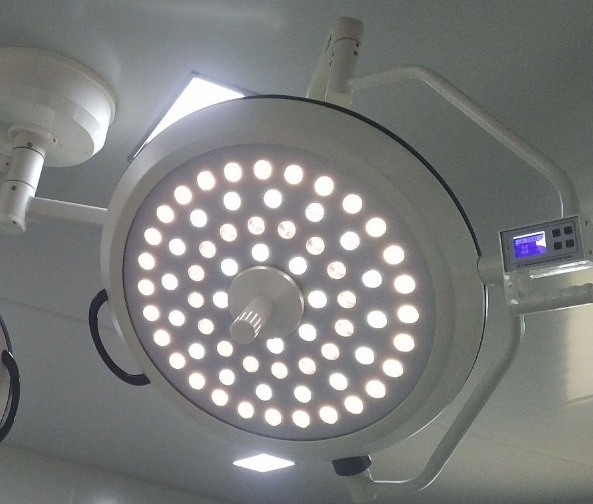
• Fault 2: Some light beads do not light up (LED shadowless light)
Cause: Single/multiple LED beads burned out, or the solder joints between the beads and the circuit board detached.
◦ Maintenance: After power failure, disassemble the lamp panel, use a multimeter to check the continuity of the lamp beads, and replace the burnt lamp beads; If it is a welding problem, use a soldering iron to re weld it firmly to avoid virtual soldering.
2、 Mechanical adjustment malfunction
• Fault 1: The lamp head cannot adjust the angle/height
Cause: Damping failure of the balance arm (loose or broken internal springs), adjustment joint jamming (lack of oil or foreign object blockage).
Repair: Disassemble the balance arm, check the spring status, replace the broken spring, and adjust the tightness; Clean up foreign objects at the joints, apply specialized medical lubricants to ensure smooth adjustment.
Fault 2: The light panel cannot be fixed and falls down on its own
Cause: Imbalance of the balance arm counterweight or wear of locking devices (such as knobs and buckles).
Repair: recalibrate the balance arm counterweight and adjust the position of the counterweight block; Replace the worn locking components, test the fixing effect, and ensure that the lamp panel can be stably fixed at any angle.
3、 Control system malfunction
• Fault 1: Control panel buttons malfunction
Cause: Oxidation of the internal contacts of the buttons, or loose connection wires between the control panel and the motherboard.
Repair: Disassemble the panel and wipe the button contacts with alcohol; Check the connecting wires, unplug and fix them again. If the buttons are damaged, replace the control panel as a whole.
• Fault 2: Unable to switch lighting modes (such as spotlight/flood)
Cause: Mode switching relay failure or abnormal control motherboard program.
Repair: Use a multimeter to check the continuity of the relay and replace the faulty relay; If it is a program issue, contact the manufacturer to rewrite the motherboard program or replace the control motherboard with the same model.
4、 Maintenance precautions
1. Before maintenance, the power must be cut off and a “device under maintenance” sign must be hung to avoid the risk of electric shock.
2. Replacement of accessories requires the use of original or medical grade accessories of the same specifications to ensure compliance with medical equipment safety standards.
3. After maintenance, functional testing (such as brightness adjustment, angle adjustment, mode switching) is required, and the illumination and shadow free rate of the lamp panel should be checked to ensure compliance with surgical requirements.
4. Conduct preventive maintenance regularly (every 3-6 months), including cleaning the lamp panel, checking wiring, calibrating the balance arm, etc., to reduce the incidence of malfunctions.
Post time: Sep-08-2025